
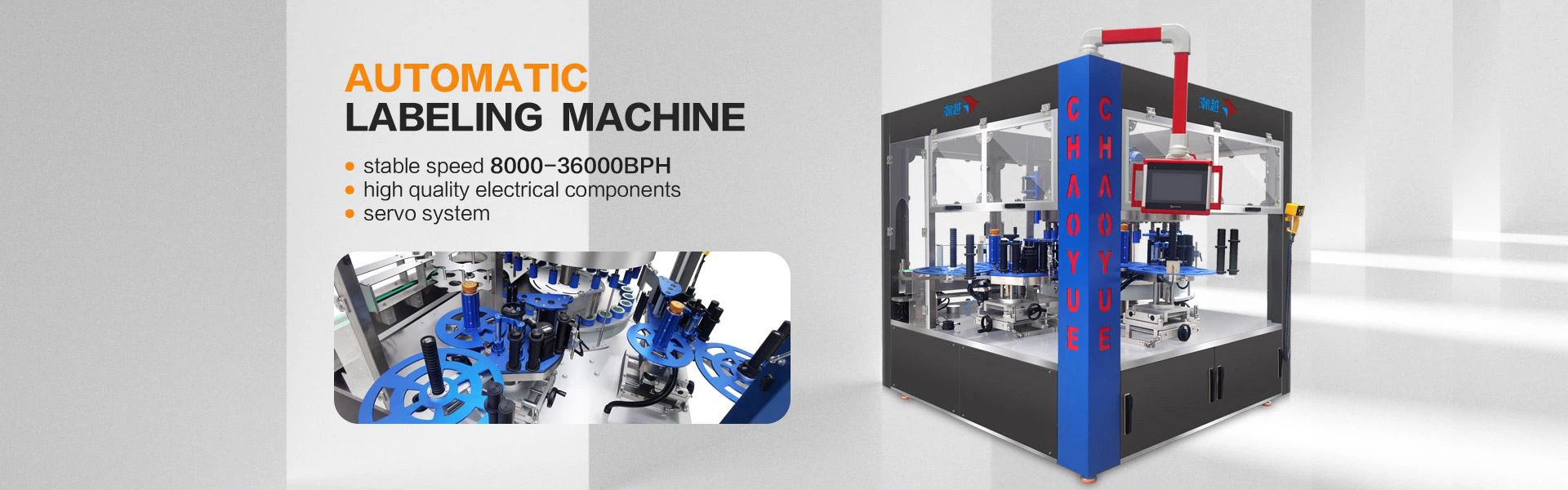

Automatic Positioning Labeling Machine
Technical Definition & Core Specifications
An Automatic Positioning Labeling Machine applies adhesive labels to predefined coordinates on a workpiece or package. Unlike standard wrap-around or friction labelers, this system uses mechanical jigs, photoelectric sensors, or vision-based indexing to lock the object's orientation before dispensing the label. This eliminates rotational slip and registration drift on items requiring exact alignment relative to handles, seams, graduation marks, or pre-printed graphics.
Standard Performance Parameters
|
Specification |
Technical Metric |
Options / Customization |
|
Labeling Accuracy |
plus/minus 0.5 mm to plus/minus 1.0 mm |
plus/minus 0.2 mm (Vision-assisted servo alignment) |
|
Throughput Speed |
40 - 150 pcs/min (Substrate-dependent) |
Up to 250 pcs/min (Multi-head synchronous) |
|
Substrate Dimensions |
Diameter: 20 - 100 mm; Length: 30 - 250 mm |
Customized quick-change tooling nests per drawing |
|
Label Roll Specs |
Core: 76 mm (3 inches); Max Outer Dia: 350 mm |
Powered jumbo unwinders up to 500 mm |
|
Control Architecture |
Siemens S7-1200 / Schneider PLC + Touch HMI |
Allen-Bradley Micro850 / Omron CJ2M |
|
Drive System |
Panasonic closed-loop stepper / Servo motors |
Full multi-axis absolute servo synchronization |
Model Selection Guide
Matching the positioning mechanism to your substrate geometry dictates long-term line efficiency.
Roller-Stationary Indexing (Cylindrical Substrates): Employs a three-roller alignment nest or pneumatic clamp to rotate bottles to a designated sensor mark (molded notch or side seam). Ideal for round glass bottles, plastic cartridges, and metal cans.
Conveyor-Mounted Fixture Pucks (Irregular & Flat Substrates): Substrates travel in dedicated carrier nests along a slat conveyor. Overhead pneumatic hold-down pads secure the part while the labeling head applies the label at a fixed station. Ideal for cosmetic compacts, electronic housings, and molded parts.
Vision-Guided Positioning (High-Precision Parts): An integrated industrial camera captures part orientation in real time, transmitting correction coordinates to the servo dispense head. Ideal for PCBs, medical devices, and components lacking mechanical reference edges.
Industry Application Matrix
|
Industry |
Substrate Material & Geometry |
Label Placement Objective |
|
Pharmaceutical |
Glass vials, HDPE dropper bottles |
Alignment with graduation scales, tamper-evident neck seals |
|
Cosmetics & Personal Care |
Acrylic jars, pump bottles, lipstick tubes |
Front/back registration, center-seam avoidance |
|
Food & Beverage |
Sauce bottles, metal tins, square containers |
Lot-code synchronization, handle alignment |
|
Electronics & Hardware |
Plastic enclosures, battery packs, adapters |
Barcode and serial number positioning within strict margins |
Manufacturing Standards & Quality Control
To verify machinery reliability prior to capital equipment procurement, evaluate our build standards:
Structural Frame: Constructed from 4 mm thick SUS304 stainless steel sheet and structural carbon steel with anti-corrosion powder coating. Laser-cut and argon-arc welded to absorb high-speed indexing vibration.
Mechanical Transmission: Drive rollers and indexing cams are CNC-machined from anodized aluminum and engineering plastics (POM/Delrin) to prevent substrate scratching.
Electrical Compliance: Panel wiring conforms to IEC 60204-1 / NFPA 79 standards. Terminals are numbered, color-coded, and segregated into low-voltage control and high-voltage power tiers.
Factory Acceptance Testing (FAT): Every unit undergoes a 72-hour continuous dry-run test followed by a 500-piece sample run utilizing customer-supplied substrates and label rolls prior to crating.
Procurement Decision Checklist
Review these operational parameters with your engineering team before issuing an RFQ:
Substrate Consistency: Are container dimensions (diameter, wall thickness, ovality) tightly controlled across production batches?
Web Material: Are you utilizing Glassine or PET backing paper? (Note: PET liners offer higher tensile strength and allow higher dispensing speeds without web breaks.)
Line Integration: Will the machine operate standalone with manual feed, or tie into an existing conveyor via upstream/downstream handshaking signals (SMEMA protocol)?
Changeover Requirements: Do you require toolless quick-change guide rails and modular star wheels for multi-SKU changeovers under 20 minutes?
Request for Quote (RFQ) Requirements
To secure an accurate proposal and engineering sign-off, please provide:
Engineering Drawings: 2D/3D CAD files of the substrate and label layout indicating exact placement tolerances.
Physical Samples: Send 20 blank substrates and 1 roll of actual labels to our testing facility for trial runs and video documentation.
Operating Parameters: Target steady-state operating speed, daily shift volume, and factory power supply specifications (e.g., 480V/60Hz/3-phase).
Frequently Asked Questions
Q: How does the system handle container variations or mold seams?
A: For round containers featuring mold seams, a high-speed fiber-optic contrast sensor detects the seam or a dedicated base notch. This triggers the stopping mechanism to orient the container precisely before the roll-on or wipe-down unit engages.
Q: What is the standard manufacturing lead time?
A: Standard single-station positioning units require 4 to 6 weeks. Fully customized systems requiring specialized mechanical nests, vision inspection integration, or multi-head synchronization require 8 to 12 weeks from drawing approval and sample receipt.
Q: What remote diagnostic support is available?
A: The HMI and PLC interface supports Ethernet/IP and Modbus TCP protocols. For approved network environments, our engineering team can access the PLC logic remotely for ladder-diagram diagnostics, firmware updates, and parameter tuning.
Q: What critical spare parts should be stocked locally?
A: We recommend maintaining an on-site inventory of high-wear components: rubber drive rollers, peeler blades, optical sensor lenses, stepper/servo drive fuses, and replacement solid-state relays. A complete recommended spare parts list (RSP) is supplied with the machinery manual.
Hot Tags: automatic positioning labeling machine, China automatic positioning labeling machine suppliers, manufacturers, factory
Send Inquiry
