
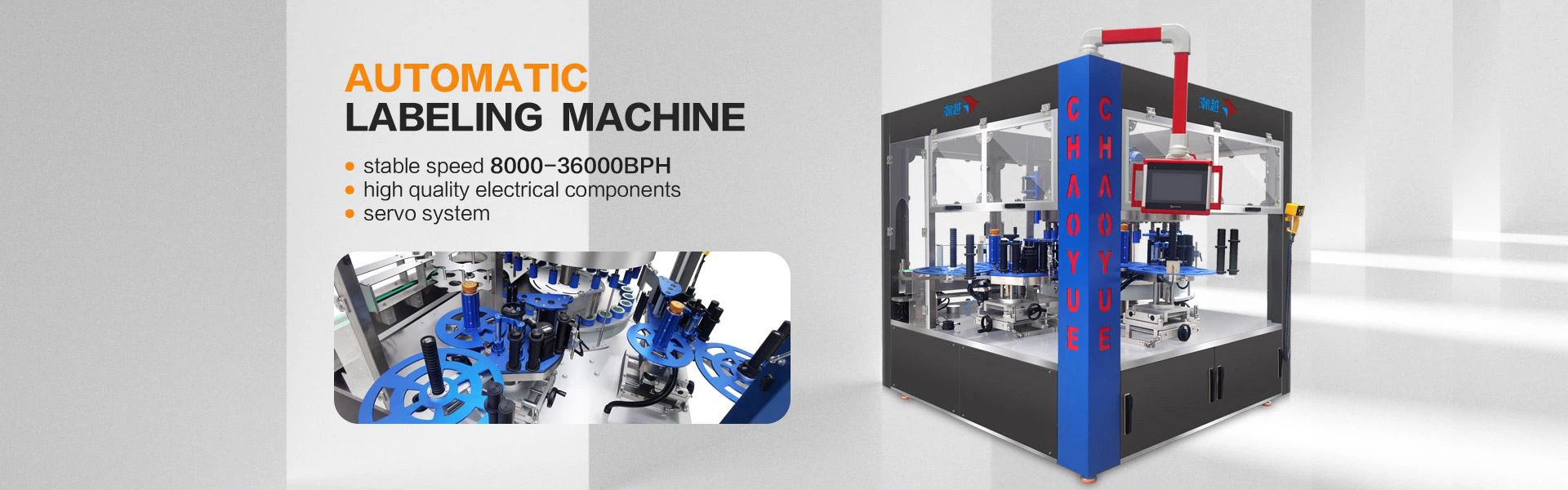

Automatic Self-Adhesive Labeling Machine
Product Selection Matrix & Technical Specifications
Selecting the correct labeling platform depends on container geometry and line speed requirements. Review the baseline configurations below.
|
Model Series |
Application Type |
Max. Labeling Speed |
Accuracy |
Container Dimensions |
Core Control System |
|
AL-100R |
Cylindrical / Round Bottles |
0 - 200 pcs/min |
±1.0 mm |
Diam. phi 30 - 100 mm |
Siemens S7-1200 PLC + Stepper/Servo |
|
AL-200D |
Dual-Side (Flat / Oval) |
0 - 180 pcs/min |
±0.8 mm |
L: 30 - 250, W: 20 - 100 mm |
Siemens PLC + Dual Servo Drives |
|
AL-300T |
Top / Flat Surface |
0 - 250 pcs/min |
±0.5 mm |
H: 10 - 300 mm |
Allen-Bradley / Siemens Motion Control |
Core Engineering & Mechanical Construction
Rigid Chassis Assembly: Frame constructed from 4 mm thick SUS304 stainless steel plates, laser-cut and argon-arc welded. Annealed to eliminate internal stress, preventing frame torsion under high-speed dynamic loads.
Tension-Stabilized Unwinding Head: Utilizes a mechanical powder brake tension control system combined with a floating roller buffer. Maintains constant web tension to prevent label stretching or web breakage during acceleration phases.
Precision Peeling Edge: Hard-chromed and diamond-polished knife edge (30-degree angle) ensures clean separation of pressure-sensitive labels from the backing paper without adhesive residue buildup.
Synchronized Wipe-Down Stations: Spring-loaded sponge roller assemblies and dual-belt wrap mechanisms apply uniform pressure across irregular container contours to eliminate air entrapment and bubbling.
Electrical & Control Architecture
Motion Control: Powered by closed-loop servo motors driving the dispensing head, synchronized with an encoder-tracked conveyor speed to ensure real-time speed compensation (1:1 linear tracking).
Sensor Suite: Standard equipped with fiber-optic gap sensors (Keyence/Datasensing) for transparent and opaque label detection, alongside container-trigger optical sensors.
HMI Interface: 7-inch color touch screen supporting recipe storage for up to 50 job profiles. Parameters such as label position delay, dispensing speed, and batch counts are directly adjustable on-screen with password-protected privilege levels.
Application & Integration Guidelines
Typical Operating Environments
- Food & Beverage: Glass bottles, PET containers, HDPE jars for sauces, dairy, and craft beverages.
- Pharmaceuticals & Cosmetics: Plastic dropper bottles, glass vials, serum bottles, and cosmetic jars requiring high-precision registration.
- Chemical & Industrial: Lubricant containers, household cleaner bottles, and chemical drums.
Line Integration Requirements
- Conveyor Interface: Standard pass-through height of 850 mm ± 50 mm, compatible with slat-chain conveyors (82.6 mm or 114.3 mm width).
- Upstream/Downstream Handshake: Equipped with potential-free digital I/O for line-stop interlocks (e.g., upstream accumulation sensor pauses labeling; downstream jam sensor halts feed).
Quality Control, Compliance & Manufacturing Standards
In-House Machining: All critical aluminum guide blocks and steel transmission shafts are machined on 4-axis CNC centers to maintain dimensional tolerances within ±0.01 mm.
Factory Acceptance Testing (FAT): Every machine undergoes a 48-hour continuous dry-run test followed by a 4-hour live test using client-supplied containers and label stock prior to crating.
Compliance & Certifications:
- Electrical control cabinets built to UL508A / CSA C22.2 standards, utilizing UL/CSA-listed circuit breakers, contactors, and terminal blocks.
- Entire electrical architecture carries CE compliance for European market export.
- Food and pharmaceutical contact zones comply with cGMP hygienic guidelines, utilizing FDA-compliant engineering plastics (POM/Nylon) and sanitary-grade stainless steel.
Frequently Asked Questions
Q: How does the machine handle transparent labels on clear PET bottles?
A: Standard optical sensors fail on clear-on-clear applications. We integrate high-sensitivity ultrasonic label gap sensors (such as Leuze or Keyence ultrasonic sensors) that detect density differentials between the label and the liner backing, ensuring precise stop positions regardless of opacity.
Q: What is the typical format changeover time between different bottle sizes?
A: Quick-change mechanisms are built into guide rails and height adjustment handwheels. A standard single-operator format changeover requires 10 to 15 minutes without requiring dedicated hand tools.
Q: What is the standard warranty and spare parts availability?
A: The machine carries a 12-month limited warranty covering all mechanical and electrical non-consumable components. Critical wearing parts (such as rubber drive rollers and fuse blocks) are stocked in standard inventories for dispatch within 48 hours. Remote diagnostic support is available via secure Ethernet connection.
Request a Technical Proposal, CAD Files & Quotation
To generate a precise engineering proposal and securely deliver the verified STEP files for your plant layout, please provide the following details when submitting your inquiry:
Container Specifications: Material (PET, Glass, HDPE), shape (Round, Square, Oval), and exact dimensions (Diameter x Height).
Label Specifications: Roll inner diameter (76 mm standard), outer diameter limit, winding direction (face out/in), and label dimensions (Width x Length).
Line Speed Requirements: Target containers per minute and current conveyor configuration.
Hot Tags: automatic self-adhesive labeling machine, China automatic self-adhesive labeling machine suppliers, manufacturers, factory
Send Inquiry
