
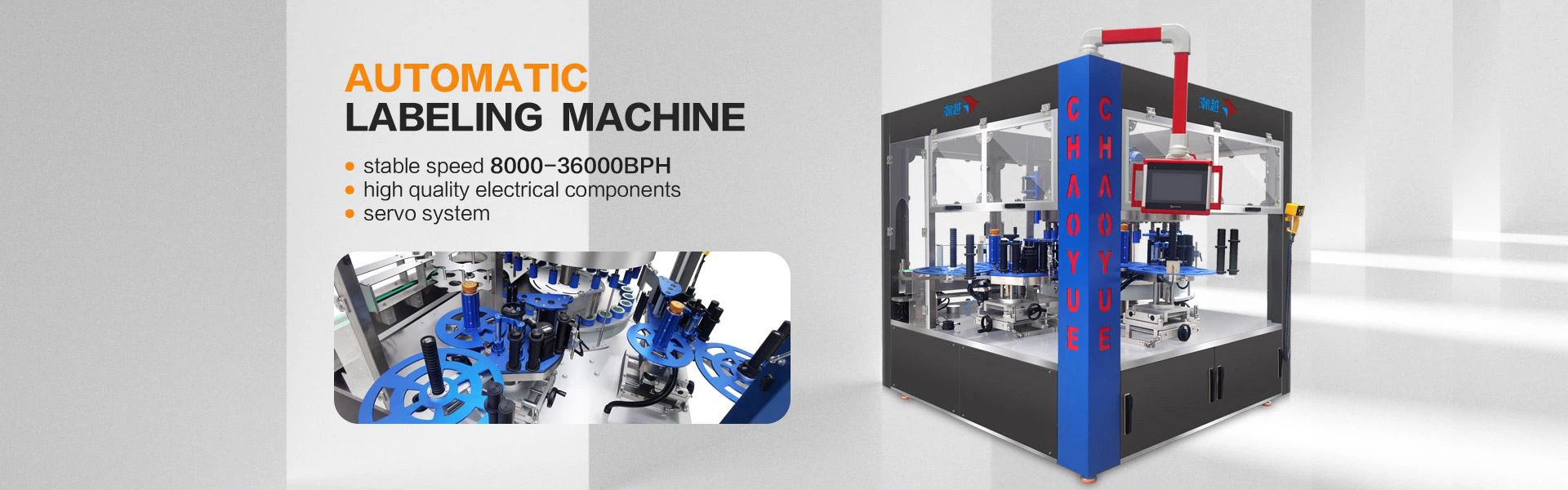

Double-Sided Flat Bottle Labeling Machine
Core Technical Specifications
|
Technical Parameter |
Industrial Grade Standard |
|
Production Line Speed |
40 - 200 bottles/min (dependent on label length and container geometry) |
|
Label Placement Tolerance |
+/- 1.0 mm (baseline under stable linear feed) |
|
Container Thickness Range |
20 mm - 100 mm |
|
Container Width Range |
40 mm - 250 mm |
|
Label Core Diameter |
76 mm (3 inches) |
|
Max Label Roll Outer Diameter |
300 mm |
|
Drive Architecture |
Closed-loop stepper or servo motor drives for dispensing heads |
|
Control System |
Industrial PLC with touchscreen HMI (recipe storage enabled) |
Product Selection & Mechanical Configurations
Selecting the correct machine variant depends directly on container geometry and rigidity.
Dual Independent Applicator Heads: Configured with two synchronized dispensing modules mounted on opposing sides. Suitable for rigid flat or square containers (glass, thick HDPE) requiring simultaneous or sequenced front and back label application.
Synchronized Chain-Aligning Unit (Spanking Station): Utilizes dual side-clamping timing chains to mechanically square oval or slightly tapered bottles prior to the labeling point, eliminating label skew.
Wrap-Around Hybrid Integration: Incorporates a 3-roller wrap station attachment alongside the flat-surface pneumatic wipe-down mechanism for facilities handling both flat and cylindrical bottles on the same line.
Application Suitability & Operating Limits
Suitable Applications
- Cosmetics & Personal Care: Flat lotion bottles, rectangular perfume glass, and hand sanitizer pumps requiring tight vertical registration.
- Automotive & Chemical: Rectangular plastic containers for motor oil additives and window wash fluid.
- Food & Beverage: Square condiment jars and cooking oil containers needing nutrition facts on the reverse and brand graphics on the front.
Operating Limits
- Extreme Tapering: Containers with sidewall draft angles exceeding 5 degrees require custom profile-milled pucks or dedicated nest fixtures.
- Flexible Packaging: Soft-sided pouches lack the structural rigidity required for flat-surface brush wiping without vacuum conveyor beds.
Materials, Construction, and Components
Structural Framing: SUS304 stainless steel framework (3 mm wall thickness profile) welded and passaged to resist corrosive chemical washdowns.
Conveyor Bed: Low-friction POM (Polyoxymethylene) slat-top chain links driven by sealed reduction gearboxes.
Peel-Off Plates: Precision-machined aluminum alloy (6061-T6) with hard-anodized surfaces to prevent web tearing at high dispensing rates.
Sensors: Keyence or Sick high-frequency optical and capacitive label gap sensors capable of detecting transparent film labels (OPP/BOPP) and paper stocks.
Pneumatics: SMC or Festo pneumatic cylinders and regulators governing final wipe-down brushes.
Supplier Evaluation Checklist
When auditing a manufacturer of inline labeling machinery, verify the following engineering capabilities:
Factory Acceptance Testing (FAT): Ability to run client-supplied sample bottles and label reels at target line speeds prior to final crating.
Electrical Standards Compliance: Control panels wired to UL/CSA (for North America) or CE standards, utilizing industrial terminal blocks and color-coded wire identification.
Open-Source PLC Logic: Provision of unencrypted PLC ladder logic to allow internal plant maintenance teams to troubleshoot local I/O faults.
Component Standardization: Utilization of off-the-shelf pneumatic valves and bearings rather than proprietary parts that restrict long-term maintenance.
RFQ Submission Guidelines
To secure an engineering quotation without delay, include the following parameters in the initial Request for Quote:
Container Technical Drawings: CAD files or dimensional specification sheets indicating wall thickness variations and mold parting lines.
Label Specifications: Die-cut dimensions, web gap distance (3 mm standard recommended), unwind direction (Chart 1-4), and material substrate (Paper vs. Transparent PET).
Line Integration Constraints: Upstream/downstream conveyor pass heights, plant electrical supply voltage (e.g., 480V/60Hz/3-phase), and potential-free line-stop interlock requirements.
Frequently Asked Questions
Q: How does the machine handle transparent film labels without missing triggers?
A: The dispensing head utilizes high-frequency ultrasonic or capacitive gap sensors instead of standard optical photoeyes. These sensors detect density differentials between the transparent label substrate and the liner backing, ensuring consistent stop points at web speeds exceeding 150 meters/minute.
Q: What mechanism prevents air bubbles from forming on flat bottle surfaces?
A: Adhesion is controlled via a dual-stage process: first, a spring-loaded rubber dispense roller applies initial contact pressure at the peel plate. Second, trailing brush arrays or pneumatic sponge rollers sweep outward from the center of the label toward the edges to expel trapped air.
Q: How is synchronization maintained between front and back labeling heads?
A: Both applicator heads are tied to a central motion controller via a high-speed encoder linked to the main conveyor drive. As the product passes the upstream sensor, the PLC calculates line speed and triggers Head A and Head B based on preset encoder pulses, maintaining placement registration within +/- 1.0 mm.
Q: What is the standard lead time for delivery?
A: Standard inline systems configured for common flat bottle sizes ship within 4 to 6 weeks. Custom configurations requiring specialized container pucks or integration with client-supplied inkjet coders require 8 to 10 weeks following sample bottle approval.
Hot Tags: double-sided flat bottle labeling machine, China double-sided flat bottle labeling machine suppliers, manufacturers, factory
Send Inquiry
