
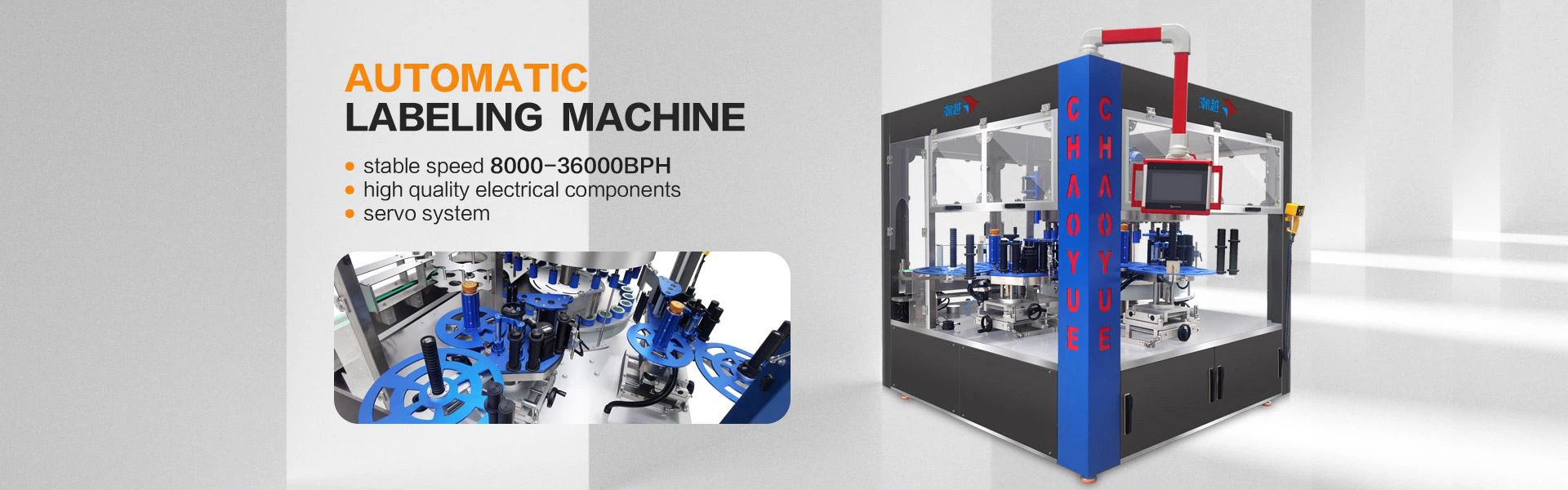

Automatic Bottle Labeling Machine
Industrial Automatic Bottle Labeling Machines for High-Speed Packaging Lines
Precision-engineered inline labeling systems designed for continuous operation across pharmaceutical, beverage, and personal care manufacturing lines. Built for tight tolerances, fast format changeovers, and seamless PLC integration.
Technical Specifications & Configuration Matrix
Selecting the correct labeling system prevents line bottlenecks. Compare core specifications across our standard inline configurations.
|
Model Series |
AL-100 (Linear Standard) |
AL-300 (High-Speed Rotary/Dual) |
AL-500 (Full Wrap / Serum) |
|
Container Type |
Cylindrical / Oval PET, Glass |
Cylindrical Round Bottles |
Small Vials, Ampoules, Droppers |
|
Max. Labeling Speed |
Up to 150 BPM |
Up to 300 BPM |
Up to 250 BPM |
|
Label Accuracy |
+/- 1.0 mm |
+/- 0.5 mm |
+/- 0.3 mm |
|
Bottle Diameter Range |
20 mm - 100 mm |
50 mm - 120 mm |
10 mm - 30 mm |
|
Label Roll Core ID |
76 mm (3 inches) |
76 mm (3 inches) |
76 mm (3 inches) |
|
Drive System |
Stepper / Servo Hybrid |
Full Closed-Loop Servo |
Dual Servo Synchronized |
|
Control Architecture |
Siemens S7-1200 PLC + HMI |
Siemens S7-1500 PLC + TP1200 |
Siemens S7-1500 PLC + Motion |
Product Selection & Engineering Principles
Dispensing Mechanism & Drive Systems
- Closed-Loop Servo Control: Driven by multi-axis servo motors to maintain synchronized tension control during acceleration and deceleration phases, eliminating web tear and label displacement.
- Peel Plate Design: Precision-machined stainless steel (316L) peel edges with a 15-degree sharp-angle release, ensuring clean separation of pressure-sensitive labels without adhesive stringing.
Sensor Integration & Inspection
- Label Gap Detection: Ultrasonic sensors detect transparent and metallic labels without calibration failure caused by transparency shifts.
- Missing Label & Rejection System: Integrated fiber-optic sensors monitor label placement. Out-of-spec containers are diverted via pneumatic pushers before reaching secondary packaging.
Application Matching & Integration
Beverage & Food: Handles wet-surface condensation resistance on glass beer bottles and high-shear wrap-around tasks for thin-walled PET water bottles.
Pharmaceuticals: Complies with cGMP requirements; utilizes non-marking contact parts, toolless quick-release components, and serialization/coding integration (Thermal Transfer Overprinters or Laser Coders).
Chemicals & Cosmetics: Corrosion-resistant structure using anodized aluminum and grade 304/316 stainless steel to withstand chemical splash environments.
Manufacturing Standards & Quality Control
Machining Tolerances: Main chassis frames are milled on CNC gantry centers to maintain dimensional stability under continuous vibrational loads (+/- 0.02 mm frame flatness).
Electrical Panel Build: Wiring harnesses adhere to NFPA 79 and CE standards, utilizing numbered terminal blocks, Panduit wire ducts, and Schneider/Siemens switchgear.
Factory Acceptance Testing (FAT): Every machine undergoes a 72-hour continuous dry-run test using customer-supplied sample bottles and actual label stock prior to crating.
Global Compliance & Regional Electrical Standards
To ensure seamless plant integration across North America and Europe, our control cabinets are built to meet rigorous regional electrical and safety codes:
North American Market: Available with UL508A certified industrial control panels, CSA-compliant wiring methods, and optional Allen-Bradley CompactLogix PLC configurations to match plant standards.
European Market: Fully CE-certified, featuring mandatory safety interlocks on all access guards, Category 3 safety relay circuits, and emergency stop configurations compliant with ISO 13849-1.
Factory Acceptance Testing (FAT) & Validation Protocol
To mitigate capital project risk and streamline on-site commissioning, our engineering team executes a strict pre-shipment verification protocol available for client inspection:
Verification Milestones: Includes mechanical dimensional checks, electrical loop-continuity tests, sensor calibration tracking, and speed-endurance verification at 100% rated capacity.
Documentation Package: Delivered with complete documentation packages including IQ/OQ protocol templates, material certificates of conformity (3.1 for contact stainless steel parts), electrical schematic drawings in EPLAN format, and PLC source code backups.
Procurement & RFQ Guide
To accelerate engineering review and provide an accurate quotation, include the following parameters in your initial inquiry:
Container Drawings / Physical Samples: Material type (glass, HDPE, PET), dimensions, wall thickness, and empty vs. filled weight.
Label Specifications: Unwind direction (A-J reference chart), roll outer diameter, core inner diameter, label stock material (BOPP, paper, clear film), and dimensions (width x length).
Line Speed Requirements: Nominal operating speed (BPM) and peak line speed.
Coding Requirements: Do you require integrated date/lot coding, serialization, or OCR verification?
Utility Conditions: Available plant compressed air pressure (bar or psi) and electrical supply voltage (e.g., 480V / 3-phase / 60Hz).
Frequently Asked Questions
Q: What is the typical format changeover time, and does it require tools?
A: Format changeovers take between 10 to 20 minutes depending on the model. Most adjustments utilize quick-release hand levers, digital position indicators, and metric scale bars, eliminating the need for hand tools.
Q: How does the machine handle transparent (clear) labels on clear PET bottles?
A: Standard optical sensors fail on clear-on-clear applications. Our machines use high-frequency ultrasonic gap sensors that measure acoustic density differences between the liner backing and the label substrate, ensuring precise triggering.
Q: What is the standard lead time from PO sign-off to shipment?
A: Standard inline labeling machines require 6 to 8 weeks. Custom configurations integrating third-party vision systems or specialized product handling starwheels require 10 to 12 weeks.
Q: What level of remote technical support is provided?
A: All PLCs are equipped with Ethernet ports for remote diagnostics via VPN routers, allowing our controls engineers to troubleshoot timing loops, firmware parameters, and servo tuning remotely.
Hot Tags: automatic bottle labeling machine, China automatic bottle labeling machine suppliers, manufacturers, factory, Automatic Side Sticker Labeling Machine, Fully Automatic Labeling Machine, Rotary Container Labeling Machine, Self Adhesive Square Bottle Labeling Machine, Square Bottle Front and Back Labeler, Wrap Around Jar Labeling Machine
Send Inquiry
